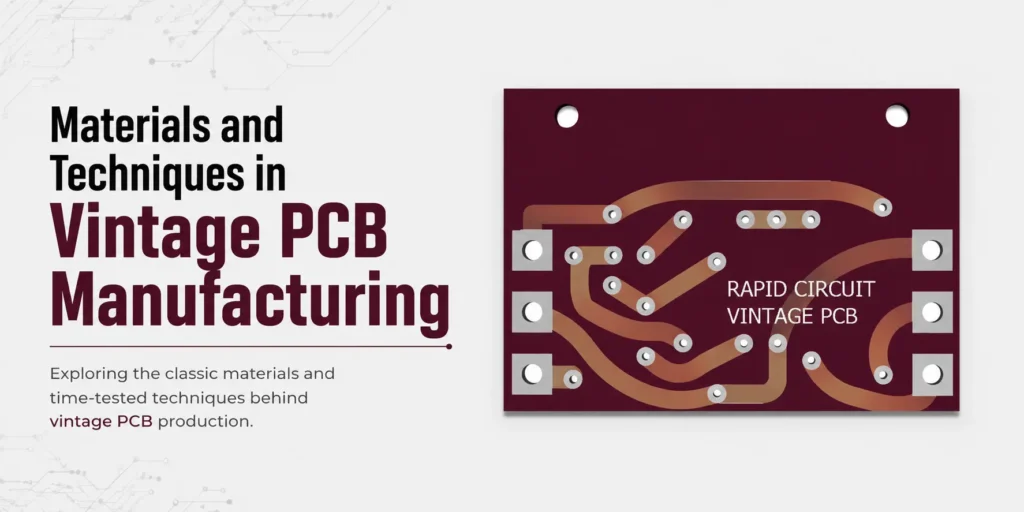
Introduction: Materials and Techniques in Vintage PCB Manufacturing
The world of electronics owes much to the early pioneers of PCB manufacturing. These innovators laid the foundation for the modern circuits we rely on today. In this blog, we'll explore the materials and techniques used in vintage PCB manufacturing, revealing how these early practices shaped the electronics industry.
The Origins of PCB Manufacturing
PCB manufacturing has a rich history. The first printed circuit boards were simple but innovative. They were created using basic materials and methods that set the stage for future advancements.
Bakelite: The First PCB Material
One of the earliest materials used was Bakelite, a thermosetting plastic. It was highly regarded for its durability and insulating properties. Bakelite was commonly used in radios and early televisions in the 1940s and 1950s.
Key Materials in Vintage PCB Manufacturing
Paper Phenolic: An Affordable Alternative
As demand for electronics grew, manufacturers needed cost-effective materials. Paper phenolic, made from paper and phenolic resin, became popular due to its affordability. It worked well for low-frequency applications.
Copper Foil: The Conductor's Backbone
Copper foil was a critical component in vintage PCBs. It formed the conductive paths that connected various components. The thickness of the copper determined how much current the board could handle.
Techniques Used in Vintage PCB Manufacturing
Early PCB engineers relied on painstaking manual processes that demanded both creativity and precision. These foundational techniques laid the groundwork for today's automated manufacturing lines.
Hand-Drawn Circuit Layouts
In the early days, engineers hand-drew PCB layouts. These designs were transferred onto substrates using photographic techniques. This method required precision and skill, as any mistake could affect the board's functionality.
Etching: Crafting the Circuit Paths
Etching was a vital step in creating circuit paths. After transferring the design, the board was dipped in an etching solution, typically ferric chloride. This process removed unwanted copper, leaving behind the desired circuit.
Drilling and Plating Through-Holes
Drilling holes in vintage PCBs was often done manually. Plating these holes with copper was essential for connecting different board layers. This technique was a precursor to today's multi-layer PCBs.
Challenges in Vintage PCB Manufacturing
Manufacturing vintage PCBs wasn't without its challenges. The manual processes involved often led to variations in the final product. Materials used in the past, while innovative, had limitations that affected the board's reliability.
Precision Issues
Without modern tools, achieving precise layouts was difficult. Variations in trace width and spacing could impact the board's performance significantly.
Material Limitations
Materials like Bakelite, XPC, and paper phenolic had their flaws. They could crack, delaminate, or corrode over time, especially in harsh environments.
Key insight: Despite these challenges, early PCB engineers demonstrated remarkable ingenuity. Their solutions — however imperfect — established the core principles that modern PCB manufacturing continues to build upon today.
The Legacy of Vintage PCBs
The techniques and materials used in vintage PCB manufacturing laid the groundwork for modern electronics. These early methods, though rudimentary, were pivotal in advancing technology. Understanding this history helps us appreciate the progress made in PCB design and manufacturing.
Conclusion
Vintage PCBs are a testament to the creativity and ingenuity of early electronics engineers. From the use of Bakelite and copper foil to hand-drawn layouts and manual drilling, these boards represent a significant era in technology.
As we continue to innovate, it's important to recognize and honor the foundations laid by these early pioneers. The challenges they overcame and the solutions they developed continue to influence PCB design and manufacturing to this day.
Want to Learn More About PCB Manufacturing?
Subscribe to our newsletter for more insights and stay updated on the latest trends and historical retrospectives in electronics. For any vintage PCB orders, please drop your inquiry at the WhatsApp icon or our email address.
Contact Us Upload Gerber File